
12 Jun When Roots Are Found and Families Are Made

When Roots Are Found and Families Are Made
The emotional landscape of biological reunion and found family — and how to move through both with care.
by
LaTasha Littleton-Guthrie, LCSW-Intera
Every birthday candle, for as long as I can remember, I made the same wish: to meet my father. He didn’t know I existed. I grew up with my mom and two half-siblings — both of whom knew their dads, spent weekends with them, had that particular kind of grounding I quietly envied. Nearly a year ago, I found my father on Ancestry.com. What followed has been one of the most illuminating, disorienting, and quietly transformative year of my life.
There is a particular kind of wondering that never quite goes to sleep. It lives in the small hours — in the shape of your hands, in the sound of your laugh, in the questions that have no easy answer. Where do I come from? Who shares my face? For millions of people — adoptees, donor-conceived individuals, those separated by circumstance or a parent who simply never knew they existed — the search for biological family is one of the most emotionally complex journeys a person can undertake.
And just as layered, just as real, is the family we build ourselves: the people who choose us, and whom we choose, entirely outside blood or legal document. Found family.
I know both. And neither is as simple as the movies suggest.
“You can love the family you found and still grieve the one you never knew. These feelings are not in competition.”
The Emotional Territory of Biological Reunion
Finding biological family tends to arrive with a collision of feelings that are hard to name. There is often joy, yes. But alongside it: grief, confusion, anger, tenderness, and a strange mourning for time that cannot be recovered.
My reunion brought understanding I had genuinely never had access to — a fuller picture of how I came to exist, traits I can now place, a medical history that had always been a blank. Finding my father also meant finding seven half-siblings and aunts I had no idea existed. That expansion of self — suddenly belonging to a wider constellation of people — is extraordinary in ways that are difficult to articulate.
But it also brought complication. Family dynamics that existed long before I arrived — patterns, loyalties, histories I was never part of — don’t simply rearrange to accommodate a new person. Figuring out where you fit inside a family that is already fully formed, already shaped by things you weren’t there for, requires a particular kind of patience. I am still learning how to hold the understanding and the confusion at once.
Growing up, I watched my half-siblings have something I didn’t have a name for yet: the particular ease of being known by both sides of yourself. They spent time with their fathers. I grew up knowing mine didn’t know I was out there. That absence shaped me in ways I am only now beginning to fully see.
Common Emotional Experiences After Biological Reunion
◆ Relief at finally having answers — even incomplete ones
◆ Grief for lost time and a different life that might have been
◆ Identity shifts — feeling suddenly more whole, or unexpectedly unmoored
◆ Loyalty conflicts, especially when other family members feel threatened
◆ Relationship ambiguity — what do you call each other? What are you, now?
◆ Elation followed by flatness, or a crash of unexpected sadness
If you recognize yourself in any of this: it is not a sign that something went wrong. It is a sign that you are fully human, and that this matters to you.

Identity, Belonging, and the “Mirror Moment”
One of the most quietly profound aspects of biological reunion is what researchers and clinicians sometimes call the “mirror moment” — the experience of seeing, for the first time, a face that resembles your own. For those who grew up without that reflection, it can be startlingly emotional. Something settles. Something also, sometimes, breaks open.
Identity is not fixed before reunion and simply confirmed after. It often shifts. People describe feeling more grounded in some ways — having medical history, learning inherited traits, understanding the origin of a talent or a tendency — while also questioning parts of the self they had built without that context. The self is resilient and adaptable. But it needs time.
And sometimes a reunion surfaces something harder: the realization that you are stepping into a pre-existing story that is complicated in ways that have nothing to do with you, and everything to do with the people who were there before you arrived. Learning how you were created, and why things unfolded the way they did, can bring clarity and grief in equal measure.
Both are worth having.
When Found Family Is the Deeper Home
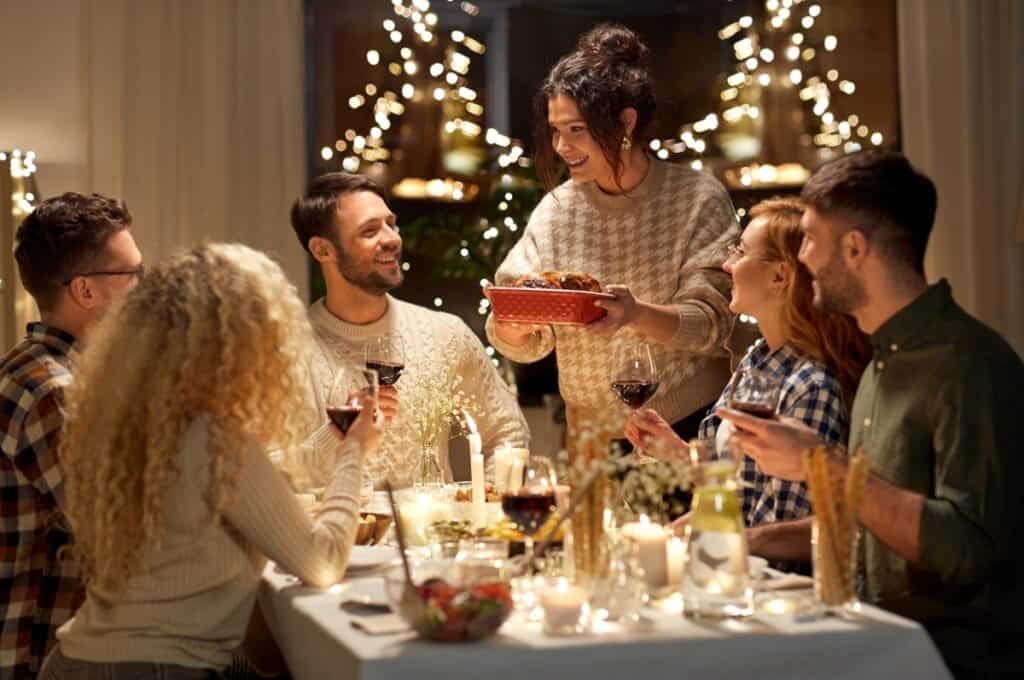
I met my five closest friends in middle school and high school. What I didn’t fully understand then — though I felt it clearly — was why I was so drawn to their families. They had something I quietly longed for: intact households, both parents present, siblings who got along, dinner tables that felt full. I was raised by my mother alone, and I gravitated toward what she and I didn’t have together, not because what we had wasn’t enough, but because I was instinctively seeking the shape of something missing.
Those families welcomed me. I spent holidays with them. They showed up for the big events alongside my mom. When I got married, my best friend’s father walked me down the aisle. Last year, I returned the favor by officiating his wedding.
“Found family does not ask you to earn your place through blood. It asks only that you show up — and it shows up for you.”
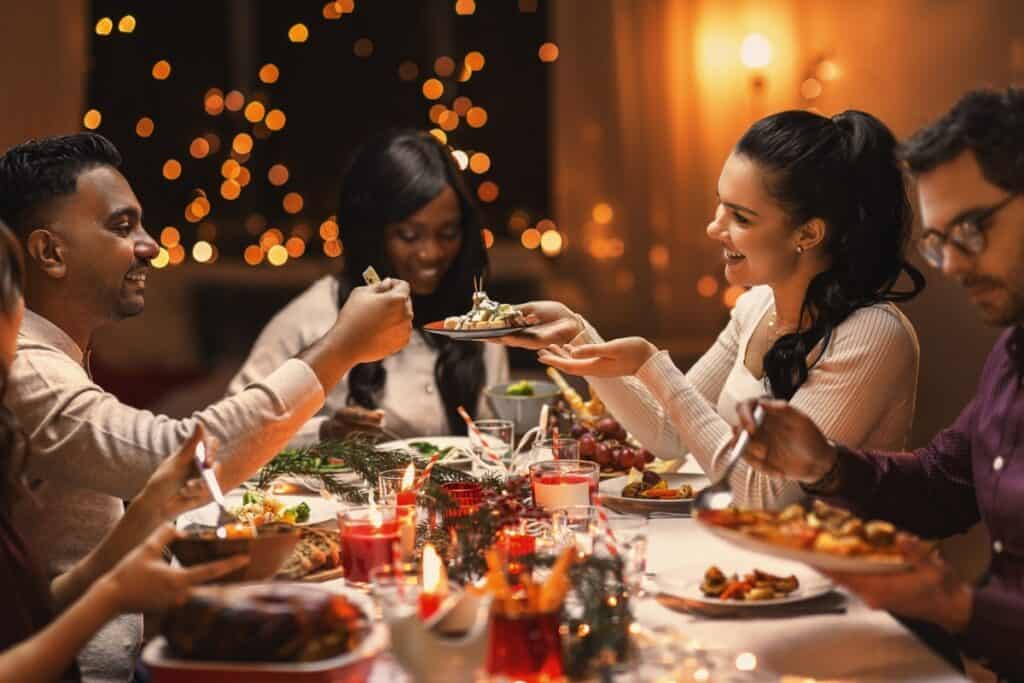
Found family operates on a different logic than biological family. It is built on sustained choice, shared experience, mutual care, and the ongoing act of showing up. Its fragility is also its beauty: these people stay because they want to. Now, years on, we have Sunday dinners together. Our children are growing up as cousins. The family we chose in adolescence has become the architecture of our adult lives.
For people navigating a complicated biological reunion, the presence of a strong found family can be an enormous source of stability — a place to return to when the newer, more uncertain territory feels overwhelming. I know it has been that for me.
Holding Both At Once
What I didn’t anticipate, in the year since I found my father, is how much I would need my found family as an anchor while I explored the biological one. The two exist in parallel now: Sunday dinners with the people who have known me for decades, and the tentative, tender work of getting to know seven half-siblings and aunts who share my blood but not yet my history.
There is no competition between them. The found family does not feel diminished by the biological one. The biological relationships don’t require me to dismantle what already exists. Both are real. Both matter. And I am learning, slowly, to move between them without feeling like I have to choose.

Coping — What Actually Helps
There is no clean timeline for any of this. Some people feel resolution relatively quickly. Others carry the layers for years, returning to them at different life stages. What tends to help, regardless of where you are in the process, practices that support emotional processing:
◆ Allow contradictory feelings to coexist. You can be grateful and grieving. Excited and terrified. Relieved and furious. None of these cancel each other out.
◆ Go slowly when you can. There is rarely a good reason to rush a reunion or force closeness. Letting things develop at a safe pace is a form of self-respect.
◆ Find people who understand. Online communities, support groups, therapists with relevant experience — talking to someone who has lived something similar is often irreplaceable.
◆ Write it down. Journaling before and after contact, or simply tracking your emotional responses over time, can make an overwhelming experience legible to yourself.
◆ Protect your existing relationships. Major reunions can inadvertently put pressure on the people closest to you. Naming that proactively goes a long way.
◆ Let your found family be your safe harbor. The people who already know and love you are not a consolation prize. They are a foundation — let them hold you while the newer territory takes shape.
◆ Consider therapy. Not because anything is wrong with you, but because this is genuinely hard, and a skilled therapist can help you carry it without becoming overwhelmed by it.
Grief Is Part of the Story, Not the Opposite of It
Grief has shown up in unexpected places this year. Not just for the father I didn’t grow up knowing, or for the half-siblings whose childhoods I wasn’t part of. But for the birthday candles. For the version of me who spent decades wondering. For the uncomplicated reunion I had quietly hoped for, and the more complex reality I am actually living.
What we resist tends to persist. What we name and feel tends, eventually, to soften. You do not have to have it all figured out. You just have to keep showing up — to both the new relationships and the enduring ones — with as much honesty and care as you can manage.
And on the days when that feels like too much, there is always Sunday dinner.
Sorry, the comment form is closed at this time.